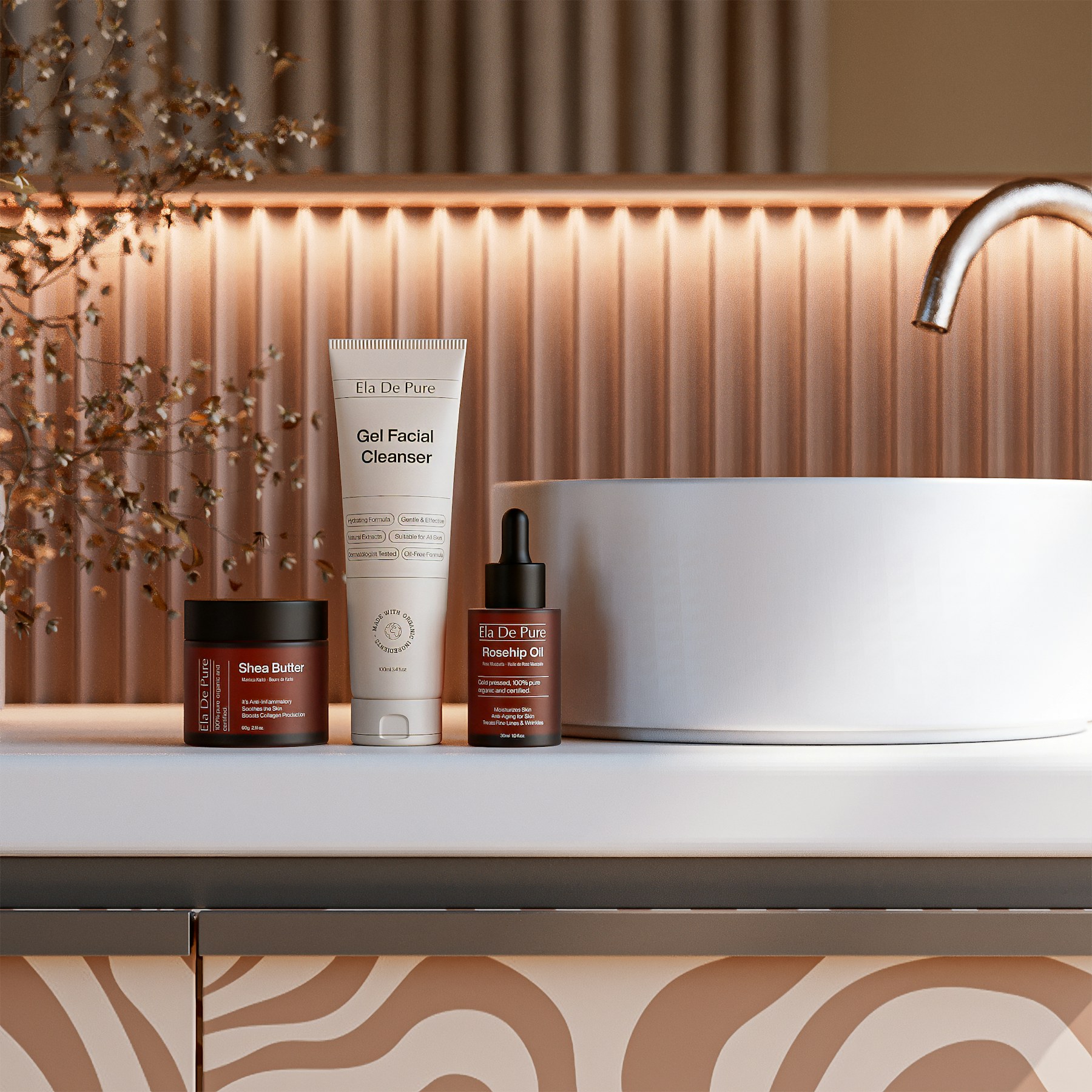
1. Keep the morning sequence short
The American Academy of Dermatology recommends applying products from thinner to thicker after cleansing: treatment or medicine when directed, moisturizer and/or sunscreen, then makeup. In warm, humid weather that order does not require more products; it gives each necessary step a clear job.
Use a gentle cleanser if your skin needs it, apply prescribed treatment exactly as directed, choose a moisturizer texture your skin tolerates, and finish exposed skin with broad-spectrum, water-resistant SPF 30 or higher. Follow the sunscreen label for amount, timing, and reapplication.
2. Respond to sweat without scrubbing
Heat and sweat can tempt repeated washing. AAD guidance favors gentle cleansing with fingertips and lukewarm water, including after heavy sweating, while avoiding abrasive scrubs. Pat rather than rub, especially when skin is already warm.
A lighter moisturizer may feel more comfortable, but light texture is not automatically better for every skin type. If air-conditioning leaves you dry, apply a small amount where needed instead of abandoning moisturizer or layering several unfamiliar serums.
3. Do not turn heat into an active-ingredient contest
Starting several acids, retinoids, brighteners, or fragranced products together makes irritation harder to trace. Add one change at a time and stop if burning, swelling, hives, or persistent rash appears. A cosmetic routine should not be used to treat a medical condition without qualified advice.
If a prescribed medicine increases sun sensitivity or irritation, ask the prescriber or pharmacist how to use it. Product popularity, country of origin, and a cooling sensation do not prove suitability.
4. Let the evening remove the real day
At night, remove sunscreen, makeup, and visible residue without assuming everyone needs a two-cleanser ritual. One gentle cleanser may be enough; a compatible first remover can help with water-resistant products. The useful endpoint is clean, comfortable skin—not tightness.
Review the routine after seven ordinary days. Keep what you used consistently and tolerated; remove duplicate steps. Seek medical care for a painful, spreading, blistering, or persistent reaction, or for any worrying skin change.
Sources and evidence limits
General cosmetic and sun-safety education, not diagnosis or personal treatment. Guidance was checked against current American Academy of Dermatology public advice; labels and professional instructions take priority.